The Japanese Red Cross is redefining disaster resilience through the “Second Hometown” concept. Developed by Yasuhiro Soshino, Head of the Humanitarian Technology Unit, this initiative addresses the extreme vulnerability of urban populations during natural disasters. By establishing a “dual-living” framework, the program encourages city dwellers to build active ties with rural communities before a crisis strikes. This ensures that when disaster hits, citizens have a known, safe, and welcoming refuge. Supported by a robust network of local governments and insurance providers, the project transforms temporary relocation into a seamless, pre-planned journey of safety.
About the pilot
Japan is a country where various disasters (earthquakes, tsunamis, typhoons, heavy rainfall and snowfall…) occur frequently, and living in a single location can increase risks during disasters due to a lack of alternative places to go.
At the same time, Japan is experiencing population decline and aging faster than anywhere else in the world. In particular, rural areas are facing depopulation and aging infrastructure, which further increases vulnerability to disasters.
In response to these challenges, the Disaster Relief Research Institute of the Japanese Red Cross Society developed the concept of “Second Hometowns.” It aims to encourage people to live, during normal times, in regions other than their primary residence, allowing them to experience housing, livelihoods, education, and community engagement in those areas. The goal is to ensure that, in times of disaster, they already have a place that can function as a safe evacuation destination.
To realize this idea as a sustainable “evacuation support service,” the institute has partnered with major Japanese airlines, non-life insurance companies, and local governments. Together, they applied for the Ministry of Land, Infrastructure, Transport and Tourism’s pilot program on dual-location living and were selected as the only project focused on disaster preparedness.
April 2026-March 2027
Launch date of the pilot
20 million Yen (€120 000)
Budget for the project
There will be two demonstrations :
- An anticipatory evacuation in preparation for a landfall in Tokyo
- A wide-area evacuation to regional areas following a major earthquake.
During the demonstration period, activities will include market research on evacuation support services and evacuation insurance, as well as several field trips that will feature community exchange programs with local residents and disaster preparedness workshops focused on wide-area evacuation during emergencies.
You have been working on disaster management for many years in Japan. What key social, economic, or behavioral trends convinced you that a “second hometown” approach was needed, and why now?
I have been involved in numerous disaster response operations with the International Red Cross and Red Crescent Movement since the 2001 Gujarat earthquake in India, working primarily as a coordinator and logistician.
The idea behind this approach was inspired by my experience during the 2013 Typhoon Haiyan disaster in the Philippines. That experience led me to recognize the need for a system that could support large-scale evacuation, particularly in anticipation of a super typhoon of similar magnitude making landfall in Japan in the future.
In response, I developed and patented a digital service that enables people to book transportation and accommodation simultaneously in the event of a disaster. This service has been highly appreciated by MaaS (Mobility as a Service) experts in Japan as an advanced concept—often referred to as “Beyond MaaS.”
At the same time, Japan is increasingly promoting dual-location living at the national level as a strategy to address rural depopulation and the overconcentration of population in urban areas. While the primary objective of this policy is regional revitalization, it also holds significant potential for disaster risk reduction. In particular, it can facilitate anticipatory evacuation based on forecasts, reduce the burden of prolonged evacuation under harsh living conditions, and support faster recovery of daily life for individuals after disasters, which are the biggest challenges Japan faces today.
This is a relatively unconventional idea. How did you secure support from the Ministry of Land, Infrastructure, Transport and Tourism, and what role do they play in shaping or scaling the pilot?
To tackle the population decline, the Ministry of Land, Infrastructure, Transport and Tourism has launched a national initiative to promote dual-location living, including a public call for pilot projects. To reach this objective, in previous projects, local governments have supported participants through measures such as:
- short-term access to public housing,
- opportunities to engage in local livelihoods such as agriculture,
- and participation in community activities, including local festivals.
Building on this policy framework, the Japanese Red Cross Disaster Management Research Institute proposed a pilot that integrates disaster preparedness into dual-location living. This initiative brings together an airline to support mobility, an insurance company to cover evacuation-related costs, and local governments serving as host communities.
The innovative approach taken to answer the Ministry’s issues got the project selected for this national program.
Can you walk us through what a “second hometown” actually looks like in practice? Who owns or maintains these places, and how are relationships built between urban residents and rural communities over time?
The “second hometown” concept can take many forms.
People living in urban areas but remote-working in rural regions can seamlessly adopt it, but it is also suited for young parents or lifelong city residents. These citizens can benefit from nature and new lifestyles. From the perspective of rural communities, even without permanent relocation, these participants can become what we might call “second citizens.” They represent a form of relationship population, bringing new energy and connections, and contributing to regional revitalization.
While the current pilot focuses on urban-to-rural movement, in the longer term, we are also exploring the possibility of building networks between rural areas.
If successful, how could this model transform pre-emptive evacuation strategies at a national level – and do you see potential for adaptation in other countries or contexts?
Despite the initiative “Early Warnings for All” (to protect all individuals in Asia and the Pacific with early warning systems) developed in Japan, experience has shown that warnings alone are not sufficient to trigger evacuation behavior. Indeed, people are more likely to act when they feel confident that they can live safely and with dignity at their destination. This requires preparation in advance—not only in terms of housing, but also livelihoods, education, mobility, and relationships with host communities.
In this pilot, we are exploring a new service model to support self-reliance, which we call an “evacuation support insurance service.” This combines transportation options with insurance coverage to help reduce evacuation-related costs.
This model has the potential to evolve into a sustainable Anticipatory Action model grounded in self-reliance, reducing sole dependence on public resources while empowering individuals to take early action.
With the multiplication of natural catastrophes and the growth of urban population worldwide, we believe this model has strong potential for adaptation in other countries. It offers a framework for creating mutual benefits between urban and rural areas, while also advancing sustainable, self-reliance-based anticipatory evacuation systems.
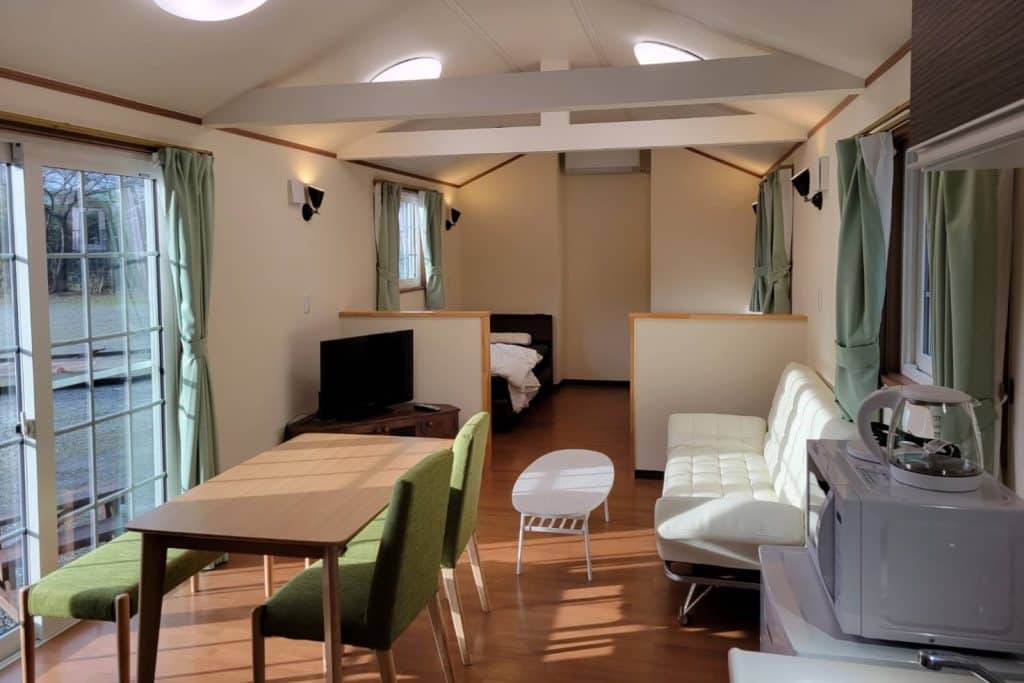
What has the project become in June 2026 ?
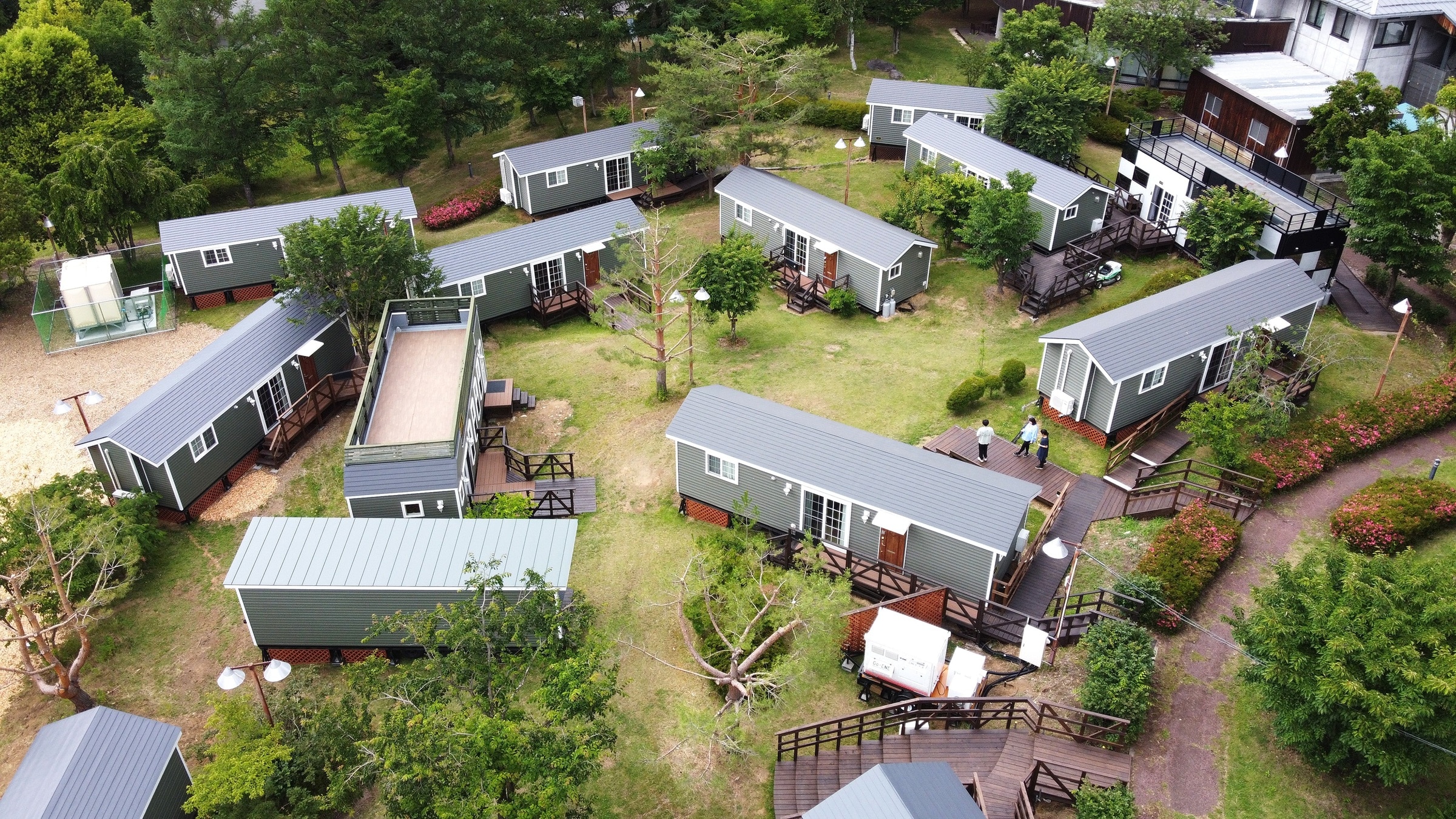
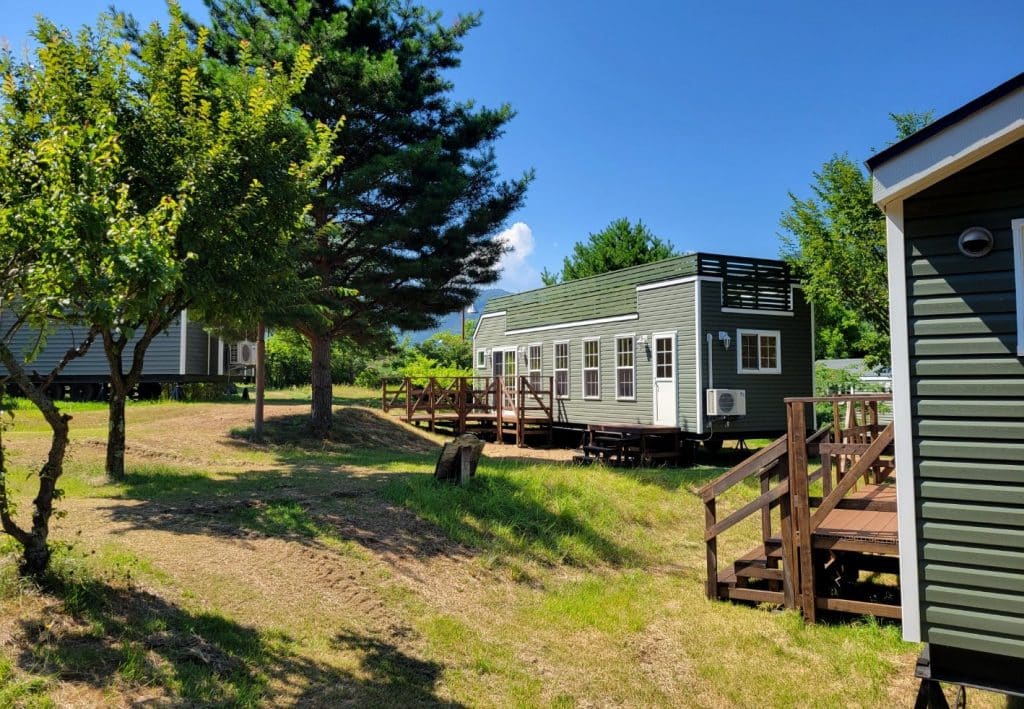
The Japanese Red Cross Society is taking the concept a step further by launching a “Movable Second Hometown” pilot in Suzaka City, Nagano Prefecture. In partnership with a local trailer house manufacturer and private sector tech partners, the initiative deploys mobile trailer houses equipped with portable battery systems and movable flush toilets. The project builds upon the innovation ecosystem built by the Japanese Red Cross Kumamoto Hospital, in collaboration with private sector partners.
This mobile infrastructure serves a dual purpose. During normal times, the units operate as eco-friendly accommodations for long-term visitors, boosting local tourism and supporting regional economic development. During disasters, the units transform into emergency assets. They can either accommodate local evacuees or be towed directly to hard-hit areas to serve as relief team base camps, temporary housing, childcare centers, or mobile clinics.