The platform presented here strengthens emergency care systems by connecting underserved populations to trained Community‑Based First Responders (CBFRs) and ambulances within minutes, reducing maternal and newborn delays and improving survival outcomes.
Context
Across many African communities, people face significant delays in accessing lifesaving emergency care due to limited emergency transport, shortages of trained responders, poor referral coordination, and long distances to functional health facilities.
These gaps create critical “Delay 1 and Delay 2” challenges, delays in recognizing an emergency and delays in reaching appropriate care, particularly for pregnant women and newborns. Traditional systems rely heavily on family members, informal transport (e.g., motorcycles), or slow facility‑level processes, resulting in preventable morbidity and mortality.
This innovative solution addresses these systemic challenges by transforming how communities access urgent care. Emergency Response Africa (ERA) connects individuals to trained Community‑Based First Responders (CBFRs) and ambulances within minutes, ensuring early recognition, first aid, and rapid transport to the right facility. This network is strengthened by structured training, digital dispatch, clinical coordination tools, and clear referral pathways, providing communities with an organized, reliable emergency response system where none existed.
Before ERA (Emergency Response Africa), communities often had no access to trained responders or safe transport options. People relied on untrained relatives, unregulated transport, or long delays waiting for overstretched facility ambulances. This created inconsistent, unsafe, and often fatal outcomes.
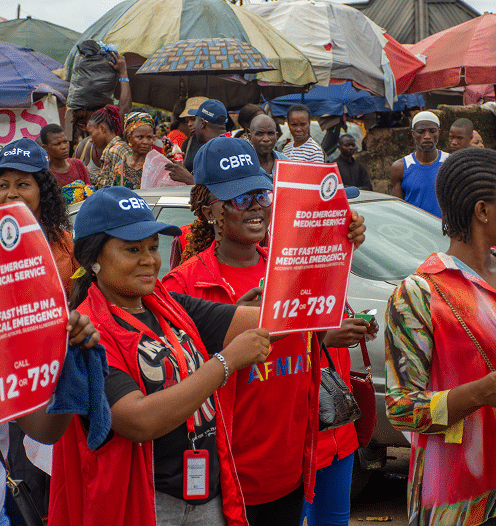
Emergency Response Africa (ERA)’s approach is more effective because it creates localized, fast, scalable access to emergency support. CBFRs (Community‑Based First Responders) – community volunteers, lay responders, and facility‑linked nurses and midwives- provide immediate first aid and stabilize patients before handover. The integration of digital dispatch and coordinated transport drastically reduces response and transfer times. Importantly, facilities benefit from better-prepared patients, improved communication, and streamlined referral processes.
By strengthening community‑to‑facility linkages, Emergency Response Africa (ERA)’s model improves survival outcomes, enhances system capacity, and builds a sustainable, community‑embedded emergency care ecosystem. This represents a significant shift from reactive, facility‑dependent responses to a proactive, community‑driven, technology‑enabled emergency care system that is more effective, equitable, and scalable.
Operations
The user journey typically begins when a person experiences or witnesses an emergency. The individual, family member, or community member initiates a request through the digital dispatch channels. Via phone call, SMS, or through community‑linked responders embedded in the area.
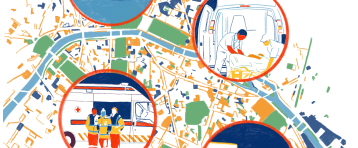
Once the alert is received, the emergency coordination centre assesses the situation and deploys the nearest available CBFR (Community‑Based First Responder) using geolocation tools and pre‑established response protocols. Community‑Based First Responders (CBFRs) are equipped to provide immediate first aid, basic life support, and early stabilization while assessing whether higher‑level care or transport is required.
If transport is needed, the dispatch system simultaneously activates the closest ambulance or transport provider within a partner network. The CBFR (Community‑Based First Responder) coordinates handover to the ambulance team once they arrive, ensuring continuity of care. Digital clinical handover tools and communication channels link CBFRs (Community‑Based First Responders), transport teams, and receiving facilities, reducing delays and preparing facilities for incoming emergencies. This workflow significantly shortens the time between the onset of an emergency, first response, and arrival at a definitive care point.
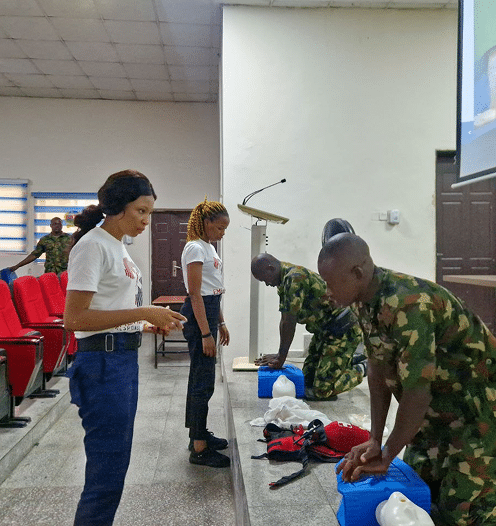
The solution relies on a combination of training programs, dispatch technology, communication tools, referral protocols, and coordinated transport networks. We deploy community‑level training for CBFRs (Community‑Based First Responders), simulation‑based exercises, and continuous quality improvement methods.
On the technology side, the organisation uses a digital dispatch application, real‑time communication tools, and structured clinical assessment templates to support consistent and safe care. The team includes emergency dispatchers, trainers, monitoring and evaluation staff, clinical supervisors, and state‑level program coordinators. Partnerships are maintained with hospitals, clinics, and ambulance providers integrated into referral and transport pathways. Through this coordinated ecosystem, the solution ensures that individuals, especially pregnant women, newborns, low-income and other vulnerable groups, receive timely, lifesaving emergency support in contexts where delays have historically been deadly.
Funding
Emergency Response Africa operates a diversified revenue model combining recurring service contracts with companies and institutions, one‑off emergency services such as ambulance standby, patient transfers, and body evacuations, as well as public and corporate training programs in first aid and Basic Life Support (BLS).
Additional income comes from licensing its digital API (Application Programming Interface) under a white‑label model, allowing partners to integrate emergency coordination features into their own systems.
Although the organization is not yet profitable, these revenue streams—together with project funding from state‑level collaborations—create a solid foundation for growth. As public‑private partnerships expand and demand increases across the emergency response network, high‑margin services such as API licensing and training programs are expected to drive profitability within the current fiscal year.
Deployment & Impact
The program produced significant, measurable improvements in maternal health behaviours and emergency responsiveness within four months:
- 435 pregnant women onboarded
- 442 transported for Antenatal Care
- 53 emergency obstetric cases supported
- 40 safe deliveries facilitated
- Antenatal Care visits increased from 500 → 604/month
- First Antenatal Care attendance improved from 87 → 125/month
- Fourth Antenatal Care completion increased from 67 → 77/month
- First‑trimester Antenatal Care improved from 40 → 56/month
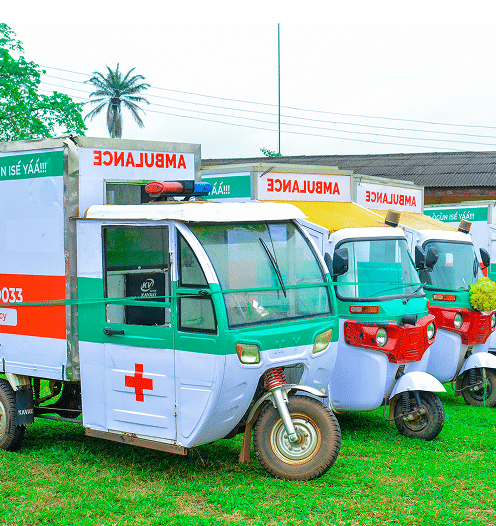
Qualitative findings highlight reduced stress, improved reliability, and greater confidence in accessing urgent care. Women emphasized that the program eliminated transport barriers, enabled consistent Antenatal Care attendance, and provided dependable emergency support e.g., direct tricycle‑ambulance pickups during labour.
Within four months, the program significantly improved maternal health service utilization and access to emergency obstetric care.
Why It Works.
R‑MHET effectively addressed structural gaps, including limited ambulances suitable for rural terrain, inadequate drivers, poor coordination, and insufficient equipment at primary health centers. By embedding responders in communities, providing reliable transport, and standardizing referral coordination, the program significantly reduced Delays 1 and 2 for pregnant women and strengthened local emergency care capacity. This project illustrates the broader value of this model.
Key figures
435
pregnant women enrolled in 4 months
53
emergency obstetric cases supported
21 %
increase in monthly antenatal visits
Partners and stakeholders
The project’s success was enabled by strong public-private collaboration:
- The state and local governments provided policy backing, coordination, and integration into the emergency care system;
- Local government authorities and PHC (Primary Health Care) facilities facilitated community entry, referrals, and service delivery; while
- Private partners, includes ambulance providers, tricycle drivers, and technology and training vendors, expanded access through reliable transport, digital coordination tools, and community‑based first responder capacity building.
Use cases & examples
While the organization implements multiple emergency care and community‑based response initiatives across different states and settings, the Rural Maternal Health Emergency Transport Program (R‑MHET) in Ogun State serves as a strong example of how the model is deployed and the measurable impact it can generate.
R‑MHET (Rural Maternal Health Emergency Transport Program) was implemented in Odeda LGA through a partnership between the Ogun State Government and Emergency Response Africa. The project operationalized the community‑embedded emergency response model by training 150+ Community‑Based First Responders (CBFRs) to provide first aid, early emergency recognition, and coordinated referrals. Emergency Response Africa strengthened dispatch and referral pathways linking communities, transport providers, and health facilities, conducted 18 outreach activities reaching 1,600+ individuals, and distributed 2,610 transport vouchers (1,305 Antenatal Care and 1,305 emergency) to eliminate transportation barriers for pregnant women. A coordinated system linking Community‑Based First Responders (CBFRs), tricycle ambulances, and facilities was established to reduce delays in seeking and reaching maternal care.
From idea to action !
Many National Societies already have trained first aid volunteers embedded in communities. This model may help you strengthen their role as community first responders, improving early response and reducing delays before professional care arrives. To adapt it to your context, ask yourself… Where are the main gaps or delays in accessing emergency care in your context? Do your existing volunteers or branches already sit close to these “dead zones” in coverage?
Start by mapping the location and density of your first aid volunteers against areas with limited emergency coverage. Use this to identify potential gaps they could help fill, even informally at first.
Engage local emergency services, health authorities, and ambulance providers to explore how trained volunteers could be better integrated into emergency response pathways and help improve coordination and response times.