Description
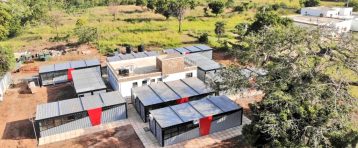
The Tiny Village is a sustainable urban living concept that caters to individuals and families seeking a deeper connection with the planet and its people. It offers a combination of individual housing surrounded by agroforestry-inspired green spaces and shared facilities, including a co-working space, a village hall for events, a yoga studio, and a permaculture-designed garden based on syntropic farming principles.
Context
Living in crowded households, isolation, and limited access to outdoor spaces can have a significant impact on mental health, particularly during a lockdown (Anquetil, 2007). Moreover, studies conducted in the EVA-Lanxmeer neighbourhood in Culemborg, The Netherlands, have revealed that the collective design, maintenance, and utilisation of green spaces can foster social cohesion among residents. In light of the COVID-19 pandemic, there has been a reevaluation of urban spaces, presenting an opportunity to envision safer and more sustainable cities (Martínez and Short, “The Pandemic City: Urban Issues in the Time of COVID-19”).
Based on these insights, The Tiny Village aims to empower citizens by fostering social connections, diversity, collaboration, and access to amenities while facilitating a reconnection with nature. Believing it can make people happier, all together.
In the short term, The Tiny Village focuses on addressing the unique housing development challenges in Lisbon, Portugal. The city has experienced significant population growth, particularly among foreigners (who represented 10% of the population in Lisbon in 2011 and increased to 22% in 2016). Considering that Lisbon makes 37% of the national GDP of Portugal and accounts for 29% of the country’s workforce, this prompts huge challenges such as the increase of rental affordability and the imbalance in the housing market.
A study from the European IMF dept. in 2021, shows an explosive growth in rent prices in Lisbon centre (the largest in Europe). As a result, a large and rising share of low-income renters, the youth, as well as middle-income groups who increasingly face rental affordability issues, is overburdened. Due to the pandemic, the IMF established Portugal, to be in a complicated situation when it comes to housing. The imbalance in the market places affects certain segments of the population at risk of exclusion, fueling inequality, even more particularly in the Lisbon Metropolitan Area.
Expanding urbanisation, demographic changes such as increased migration, tax exemption for foreigners, cheap bank credit and tourism are among the main factors described by the IMF which clearly states the risk: leaving low-income people and young people behind.
As a response to these challenges, The Tiny Village was founded as a Minimum Viable Product (MVP) to gather feedback from targeted local communities and explore various options and solutions. Today, Tiny Villages can be found in different neighbourhoods across Lisbon, each facing their own social and environmental challenges. By offering shared amenities and a vegetable garden, The Tiny Village presents a new approach to consumption and provides a solution for people and children seeking closer connections with nature.
Operations & technical details
Situated in peri-urban locations with convenient access to public transport, The Tiny Village allows its residents to enjoy both city life when commuting to work or attending social events and village life when working remotely or participating in village activities. The village’s vegetable garden plays a crucial role in promoting sustainable food practices, agricultural education, biodiversity, and self-sufficiency.
The Tiny Village is an open space, welcoming surrounding communities to utilise shared amenities and participate in organised activities. The project emphasises engagement and empowerment of inhabitants, stakeholders, and people from neighbouring communities at all levels for its development.
The Tiny Village puts forward several innovation proposals in various domains.
- Societal Innovation: The Tiny Village proposes a modern community type way of life which re-creates villages social organisation (the revival of cultural traditions of mutual assistance and long-term social bonds with an emphasis on sharing and exchanging) where people know each other, interact, can create ties and help each other if required. Tiny Village’s events and activities in various fields are designed to create a sense of community belonging.
- Administrative innovation: The project embraces validated learning and prioritises people’s needs to navigate through times of uncertainty, such as pandemics, wars, or refugee crises, to ensure the right solutions are developed.
- Technological innovation: The Tiny App and building embedded systems serve as digital tools for community members to book events, activities, and amenities. It also facilitates electronic governance by enabling two-way communication for feedback, ensuring service needs are met, and supporting continuous transformation and improvement of The Tiny Villages.
- Educational innovation: The inclusion of a community garden and kitchen aims to bring people together, encourage fun, cooking, and shared meals, all while making a positive impact on the planet and its people. The Village in itself, through a new approach to consumption (collaborative consumption) and a vegetable garden, is a powerful way to spearhead a shift to more sustainable behaviours and mindsets.
Deployment & Impact
Wherever a Tiny Village is developed, it contributes to the protection or reintroduction of biodiversity, reduces soil sealing, and safeguards the land from real estate speculation. The Tiny Village model effectively safeguards peri-urban lands on which it is situated, regardless of potential unfavourable political decisions. This is achieved through a distinct approach that deviates from the traditional real estate business model. Unlike buying properties for resale, The Tiny Village retains ownership of its villages and offers a comprehensive array of shared amenities, services, and events at affordable or even free prices. As a result, the Tiny Villages serve as robust shields against the threat of gentrification.
Environmental sustainability is a priority, reflected in the integrated approach to land design and management. Thus, The Tiny Village opted for an integrated approach to land design based on strategic spatial planning enabling spatial interactions between different land uses (infrastructures, agriculture, water…). Furthermore, Tiny Villages propose real hands-on solutions to combat soil sealing.
Its land design takes into account an efficient and sustainable use of natural resources, of which soil is a primary component. Tiny Villages use permeable materials and surfaces when a ground structure is required. This is the case for pathways and parking areas where great solutions for permeable surface application already exist.